
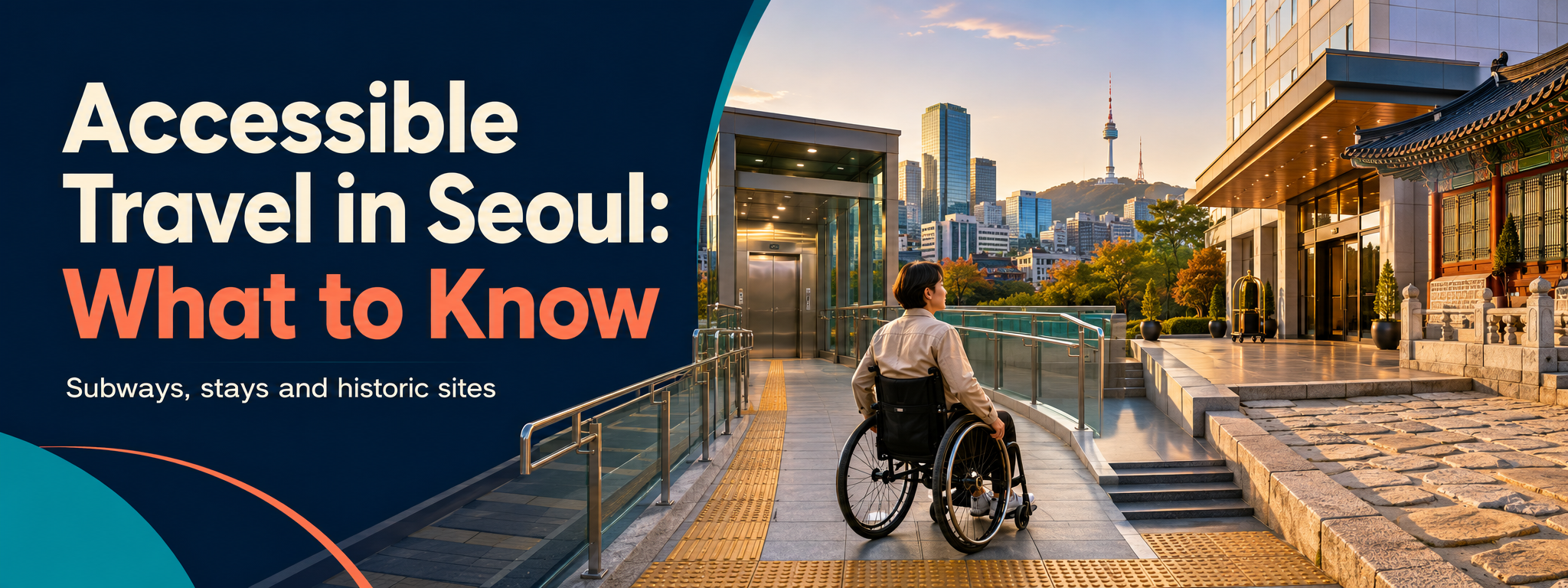

The subway
Newer stations and lines generally have elevators and accessible routes, and the system has improved considerably over the past couple of decades — but older stations, particularly on Line 1 and some of the earliest-built stretches of other lines, can still be stair-only or have limited elevator access. Checking station-specific accessibility before relying on a particular route is worth the extra step.
Palaces and historic sites
Palace grounds are large, often gravel-surfaced, and historically weren't designed with modern accessibility in mind — Gyeongbokgung and the other major palaces have made incremental improvements, but expect some genuinely inaccessible areas, particularly building interiors with raised traditional thresholds. Contact specific sites ahead of a visit if accessibility is a hard requirement rather than a preference.
Hotels and accommodation
Larger international chain hotels are the most reliable bet for accessible rooms and facilities. Smaller guesthouses and hanok stays (see our hanok stays guide) are considerably less likely to be accessible, given the traditional architecture often involves raised floors and narrow doorways by design.
Restaurants and everyday spaces
Many casual Korean restaurants use floor seating, which isn't accessible for all mobility needs — larger restaurants and chains more commonly offer table seating throughout, so it's worth checking or calling ahead for smaller, traditional-style restaurants specifically.